Prove it
Talk to thirty people who have the problem. Come back with one who’ll pay.
The gateA letter of intent, a pilot agreement or a budget line.
30 founders · Six months · Mumbai · Begins 6 March 2027
The one who knows
You know exactly where it breaks. You know who would pay to fix it. Nobody in Silicon Valley knows that. You do.
What changed
Building gets cheaper every month. Knowing what’s worth building doesn’t. That’s the part you’ve spent your whole career on.
Meanwhile
In San Francisco, Y Combinator is asking founders to build AI for America’s city halls and benefit offices.
“That’s the challenge and opportunity before every Indian: to create solutions for India’s problems and contribute to building a developed nation by 2047.”
Shri Jayant Chaudhary, Union Minister of State, to founders at the AGB Innovation Pitch
AI that lets a trained clerk do work that now waits for a specialist: assessing a claim, coding a medical bill, preparing a tax filing.
GST returns, invoice matching, e-way bills and compliance, for firms with no finance team.
Pre-approvals and claim papers moving between hospitals, administrators and insurers, with a person signing off.
A citizen proves income, address and family details once, in their own language. The product does the rest, across departments.
Crop, credit and insurance guidance by voice, in local languages, for people who will never install an app.
Small models on local hardware for schools, courts and factories where connectivity, cost or data rules keep the cloud out.
Source: Y Combinator, Requests for Startups, Winter 2027.
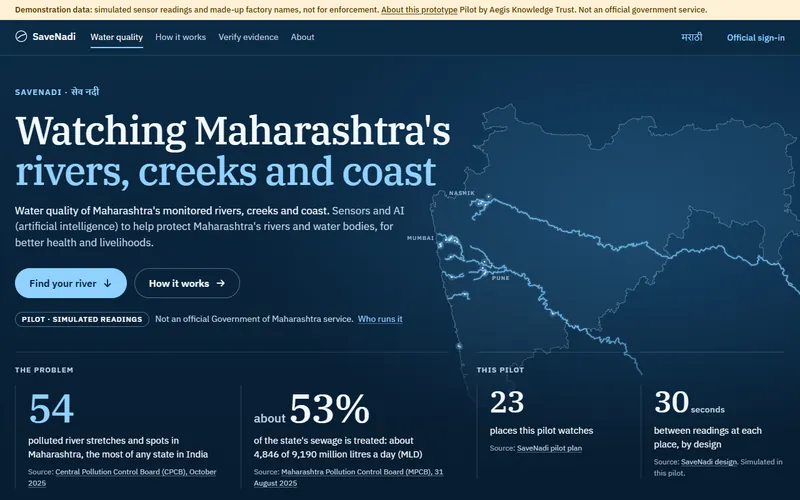
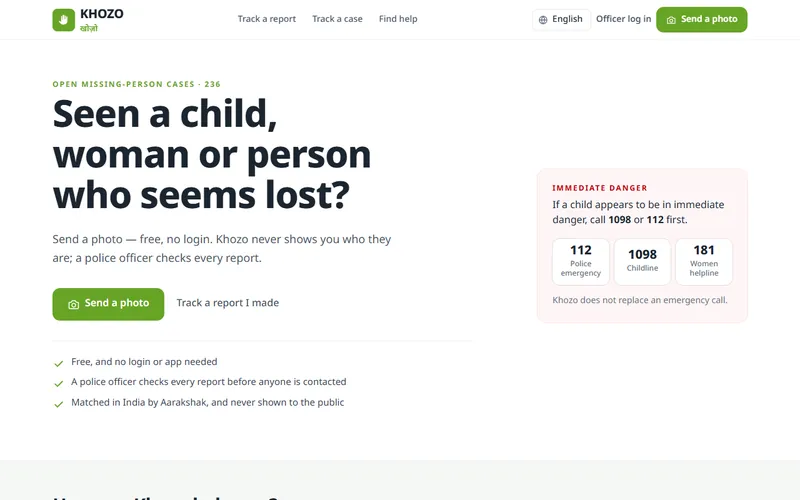
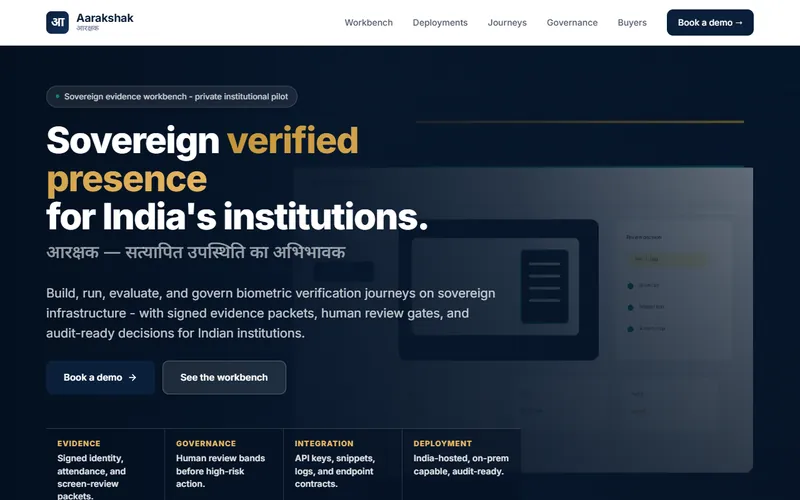
We’ve done this ourselves
The road
Talk to thirty people who have the problem. Come back with one who’ll pay.
The gateA letter of intent, a pilot agreement or a budget line.
Your team builds it, with AI agents. Real users, real data, real numbers.
The gateA live pilot, built by you, with accuracy and cost measured.
Your price, your first paying customers, a real company, your first hire.
The gateJury Day. You defend it in front of a panel, with investors invited.
Some of you will stop at the first gate. Good. Better to find out in eight weeks than in two years.
Finish Y Combinator’s free Startup School. It takes 7 to 14 hours. We won’t spend your time teaching what they give away.
The room
Most people in your life won’t. There are 30 seats, so that these people can actually learn your name.

Founded Aegis in 2002. Started the Aegis Graham Bell Awards.
CEO of Aegis School of Data Science & AI. Launched the mUni Campus platform in 2013. Ask about first customers, selling to enterprises and government, and building something that lasts.

Google AI. Shows engineers how a business problem becomes a working AI system.
Ask about architecture, testing against real cases, what breaks in production and how to fix it.
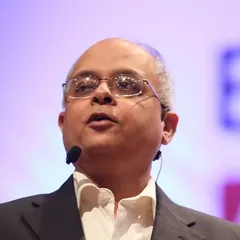
Director of Aegis. Adjunct Faculty, IIT Bombay.
B.Tech and PhD from IIT Bombay. Former Vice President of Innovation and Incubation at Geometric Ltd. Ask about choosing the problem, judging a pilot and getting to production.

Dean of Aegis. Founding Dean, IIM Indore. Former IAS officer.
Former Dean at TISS, Mumbai. Ask about co-founder fights, first hires, leading a small team, and how government works.
Also in the room: a co-founder you haven’t met yet. Founders who won at our awards, telling the real story off the record. And when you’re ready, an introduction to someone who might buy.
Bhupesh, Dr. Kulkarni and Dr. Gangopadhyay also sit on the awards jury. They step aside when a School venture comes up. Titles identify each mentor; the School is run by Aegis alone.

The stage
Nobody can promise you that moment. Not us. An independent jury decides, and it doesn’t care who taught you. So we’ll score you the way they score, from the first week.
From the awards nomination process.
We get every venture ready to nominate for the Aegis Graham Bell Awards and apply to the AGB Innovation Pitch. You’re judged on the same terms as everyone else, and Aegis holds no stake in you.
Enterprises come looking for AI products at Bharat AI Innovation, organised by Aegis Knowledge Trust.
Figures from bellaward.com, November 2026.
The deal
100%
of your company stays yours.
Aegis takes no equity, now or later. The fee is ₹3,00,000 plus GST. You pay ₹60,000 to begin, and the rest only after you’ve passed a gate.
| Stage | Dates (2027) | Fee + 18% GST | You pay |
|---|---|---|---|
| Prove it | 6 March to 30 April | ₹60,000 | When you accept your seat |
| Build it | 1 May to 25 June | ₹1,20,000 | After you pass the first gate |
| Stand it up | 26 June to 20 August | ₹1,20,000 | After you pass the second gate |
| Jury Day | 21 August, Mumbai | Included |
Before you go on
No. You need to know the problem. But by the end of the second stage someone on your team has to be able to build and run the product, because the core of it can’t be outsourced. Domain experts either learn to build with AI coding agents here, or team up with a builder they meet here.
None of them. You need a problem you understand better than most people, and the time to go and talk to the people who have it. Come alone if you like. Teams form in the first weeks.
Yes, through the first two stages. In the third, at least one founder in each venture goes full-time, and that can be your co-founder. Do check your employment contract on outside work and intellectual property before you build anything.
₹3,00,000 plus 18% GST per founder, paid in three parts: ₹60,000 to begin, ₹1,20,000 after you pass the first gate, and ₹1,20,000 after the second. A co-founder on the same venture pays half. If you stop, you owe nothing more.
No. No shares, no warrant, no claim on your company later. We aren’t putting money into your company, so we don’t take a piece of it. And Aegis runs the awards you may enter, so owning part of you would be wrong.
Applications close on 31 January 2027. The first weekend is 6 and 7 March 2027, and Jury Day is 21 August 2027. There are two live evenings a week online and one weekend a month in Mumbai. The first stage takes 12 to 15 hours a week and the second takes 20 to 25.
If you’re ready to go full-time now and one of them will take you, go. They put money in and take equity. Y Combinator invests $500,000, wants you full-time in San Francisco for three months, and needs a parent company in the US, Canada, Singapore or the Cayman Islands. We’re for the stage before that: you know a problem, you may still have a job, and your company stays Indian. We take no equity, so you can apply to any of them afterwards.
Take Startup School. It’s very good, and we ask every founder to finish it before the first weekend. It teaches you how startups work. It can’t sit across from you and tell you your numbers don’t add up, put a co-founder in the room, or introduce you to an Indian buyer.
Better to find out in eight weeks than in two years. Change the problem, join another team before the build stage, or stop. You pay nothing for stages you don’t take.
No, and be careful of anyone who says they will. We get you ready to nominate for the awards and apply to the pitch. The jury is independent, and investors decide for themselves. Mentors who sit on the jury step aside when a School venture comes up.
A company, or the truth about your idea. There’s no degree and no certificate.
Your move
Tell us the problem in two or three lines. No deck, no pitch. We read every one.
Rather talk first? admissions@aegis.edu.in or +91 7777 066 810. Or come and find us at Bharat AI Innovation, 20 and 21 November, World Trade Center Mumbai.
Someone from Aegis will read this and write back. Can’t wait? Call +91 7777 066 810.